Introduction
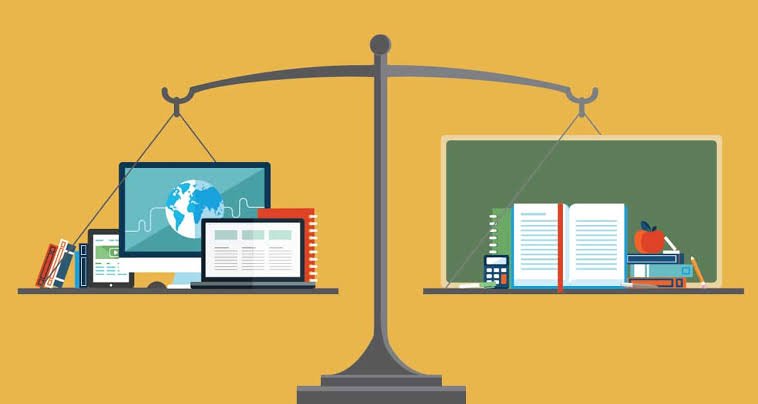
For working professionals, parents managing a household, or students who simply can’t relocate, the distance education vs regular education question isn’t just academic curiosity — it’s a genuinely practical decision affecting years of their life. Both paths have real trade-offs, and pretending one is universally superior would be dishonest. Let’s look at this honestly, factor by factor.
Flexibility: Distance Education’s Biggest Advantage
Direct answer: In the distance education vs regular education comparison, flexibility is where distance learning clearly wins — students can study at their own pace, around work or family commitments, without being tied to a fixed campus schedule.
This matters enormously for working professionals trying to upskill or complete a degree without quitting their job.
Recognition and Employer Perception
- UGC-approved distance education degrees are legally equivalent to regular degrees for most purposes
- Some employers, particularly in traditional or government sectors, still show a slight preference for regular degrees
- Field matters significantly — an MBA via distance learning is viewed differently than, say, a distance B.Ed for teaching roles
Peer Interaction and Networking Opportunities
Regular, on-campus education offers something distance learning genuinely struggles to replicate — daily peer interaction, spontaneous networking, and hands-on group collaboration that shapes both skills and professional connections.
I’ve noticed alumni networks from regular full-time programs tend to be considerably stronger than those from distance programs, simply due to the shared physical experience.
Practical, Hands-On Learning Requirements
Direct answer: For fields requiring lab work, clinical training, or hands-on practical skills — like engineering, medicine, or certain sciences — regular education remains largely necessary, since distance education struggles to replicate these components adequately.
- Engineering and medical fields generally require regular, in-person education
- Business, humanities, and many management fields adapt well to distance formats
- Hybrid programs are increasingly bridging this gap for select fields
Cost Comparison
Distance education programs are typically significantly cheaper than regular full-time programs, both in tuition and associated living costs, since students don’t need to relocate or pay hostel fees.
[link to related guide about ugc approved distance learning universities here]
Who Should Actually Choose Distance Education?
- Working professionals seeking to upskill without leaving their job
- Students in remote areas without easy access to quality regular colleges
- Those managing family responsibilities alongside education
Who Should Consider Regular Education Instead?
- Fresh school graduates without work or family constraints
- Students in fields requiring hands-on lab or clinical training
- Those who value the campus experience and networking opportunities highly
FAQ
Q: Is a distance education degree valid for government jobs? Yes, as long as it’s from a UGC-approved and recognised distance education institution, it’s valid for most government job applications.
Q: Which is cheaper, distance education or regular education? Distance education is generally significantly cheaper, primarily because it eliminates hostel, commuting, and campus infrastructure costs.
Q: Do employers treat distance education degrees differently? Some traditional sectors show a mild preference for regular degrees, but this gap has narrowed considerably, especially in private and corporate sectors.
Q: Can I pursue distance education while working full-time? Yes, this is actually one of the primary reasons professionals choose distance education — it’s specifically designed to accommodate working schedules.
Q: Is distance education suitable for technical fields like engineering? Generally not ideal, since these fields require substantial hands-on lab and practical training that distance formats struggle to fully deliver.
Conclusion
The distance education vs regular education decision really comes down to your current life circumstances and career field. If flexibility and cost matter most, and your field doesn’t demand hands-on training, distance education is a genuinely solid choice. If you’re a fresh graduate with no major constraints, the campus experience of regular education still offers real, hard-to-replicate value. Assess your specific situation honestly before committing either way.
Alt text suggestions:
- “Working professional studying for distance education degree at home”
- “Split image comparing campus classroom and online distance learning setup”
- “Distance education student attending virtual class on laptop”